Critically examine the working of the collegium system in the appointment of judges to the Higher Judiciary in India.
In short
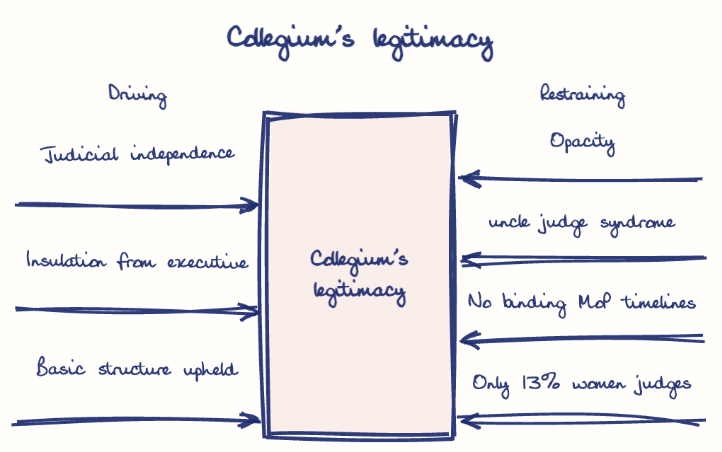
The collegium system, born of the Second and Third Judges Cases, protects judicial independence by letting senior judges recommend appointments, but it is opaque, slow and socially narrow. High Court vacancies near 33% and only 13% of High Court judges are women, so reform must add transparency without executive control.
Model answer
Ghissu Editorial · Verified 4 Oct 2026 · 282 words
Judicial Primacy in Appointments
The CJI and senior Supreme Court judges recommend appointments under Articles 124 and 217, limiting executive interference and preserving judicial independence as affirmed in the Second and Third Judges Cases.
Consultative Mechanism Limitations
The collegium consults senior judges and High Court Chief Justices, but this process lacks formal accountability and clear criteria, contributing to delays and opaque decision-making.
Representation Deficits
Only 13% of High Court judges are women; SC/ST representation is around 10%, with dominant castes like Brahmins overrepresented, reflecting structural bias and undermining democratic legitimacy.
Accountability and Transparency Issues
Closed-door decisions invite nepotism allegations, as highlighted in the Law Commission’s 230th report, weakening public trust and raising concerns about “uncle judge syndrome.”
Democratic Legitimacy Concerns
Skewed caste and gender representation questions the system’s inclusiveness and public confidence, affecting the judiciary’s credibility.
Institutionalise Transparency
Publishing reasons for appointments and rejections can enhance accountability and trust. Establishing a secretariat to support the collegium may improve efficiency and record-keeping.
Address Representation and Delays
Introducing enforceable timelines in the MoP and proactive measures to increase diversity can reduce vacancies and promote equitable representation.
This model answer is indicative and the model can make mistakes; please verify key facts independently.
Practise this question
1Get the answer sheet
Sized for this question.
2Write your answer
Timed, by hand.
3Get it marked
Your score and what to fix.
This chapter in the exam
Judiciary: courts, judicial review, activism, independence2 questions
Asked in 2 of 2 sittings since 2016
Most tested: Judicial independence in the higher judiciary, especially appointment and the scope of judicial review over constitutional change.
Question from the official TGPSC Group-I Mains 2024 paper. Answer written by Ghissu's engine and checked against our editorial standards. Found an error? Tell us and we correct it within 48 hours.