Examine the environmental implications of replacement of conventional fossil fuel-based power by green power.
In short
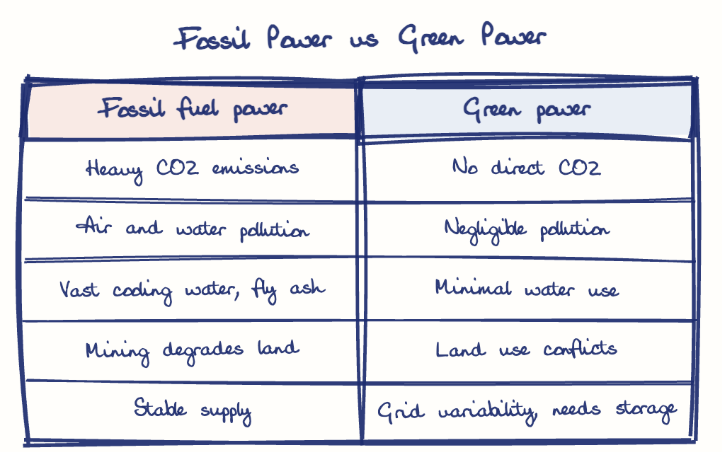
Replacing fossil power with solar and wind cuts carbon emissions, air pollution, water use and fly ash, though it brings land-use conflicts and grid-integration challenges. Coal still yields about three-fourths of India's electricity, making the shift central to the target of 50% non-fossil capacity by 2030 and net-zero by 2070.
Model answer
Ghissu Editorial · Verified 4 Oct 2026 · 273 words
High Carbon Emissions
Coal-based plants, about half of installed capacity and three-fourths of generation, emit vast CO2; Ramagundam coal plant is a major emitter.
Air and Water Pollution
Fossil fuel combustion releases pollutants causing respiratory diseases; thermal plants discharge heated water harming aquatic life.
Carbon Emission Reduction
Solar and wind generate power without direct CO2 emissions; Telangana’s solar parks in Medak and rooftop initiatives in Hyderabad reduce fossil fuel dependence.
Grid Integration and Variability Challenges
Renewable intermittency demands smart grids and storage; Telangana’s grid infrastructure faces challenges integrating renewables.
Net Positive Climate Impact
Renewables drastically cut emissions, aiding India’s INDC targets and improving air quality in hubs like Ramagundam.
Ecosystem Benefits and Land Use Conflicts
Reduced mining aids biodiversity, but renewable projects risk habitat fragmentation, as in Telangana’s agency tracts.
Strengthen Grid Infrastructure
Invest in smart grids and storage in Telangana for stable renewable integration.
Implement Land Use Planning
Develop renewable plans balancing ecological and social concerns to minimize habitat disruption.
This model answer is indicative and the model can make mistakes; please verify key facts independently.
Practise this question
1Get the answer sheet
Sized for this question.
2Write your answer
Timed, by hand.
3Get it marked
Your score and what to fix.
This chapter in the exam
Environment vs development, environmental policy3 questions
Asked in 2 of 2 sittings since 2016
Most tested: Balancing economic development with environmental sustainability.
Question from the official TGPSC Group-I Mains 2024 paper. Answer written by Ghissu's engine and checked against our editorial standards. Found an error? Tell us and we correct it within 48 hours.