Explain the impact of Solid Waste Management on urban health and environment. Highlight the key features of Solid Waste Management Rules, 2016.
In short
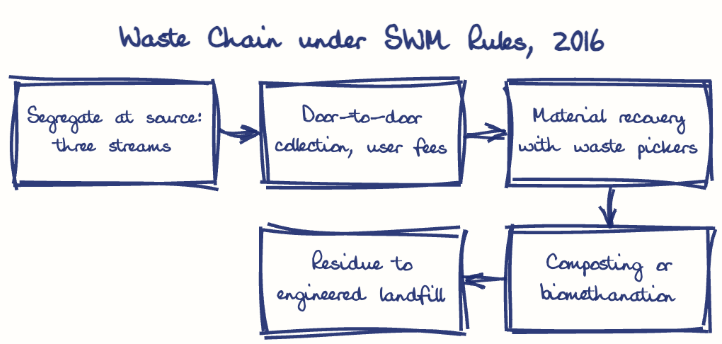
Proper solid waste management protects urban health by removing disease vectors and open burning, and protects the environment by preventing leachate, methane and land pollution. The 2016 Rules mandate three-way source segregation, user fees and spot fines, material recovery facilities including waste pickers, on-site composting and engineered landfills.
Model answer
Ghissu Editorial · Verified 4 Oct 2026 · 269 words
Disease Vector Control
Proper SWM reduces breeding grounds for mosquitoes, flies, and rodents, lowering vector-borne diseases like dengue and malaria; cities with door-to-door collection and segregation report fewer outbreaks. The Rules emphasize material recovery facilities, improving safety for informal waste pickers by reducing manual handling of mixed waste.
Pollution Mitigation
The 2016 Rules mandate scientific waste processing to prevent soil and water contamination from landfill leachate, protecting urban water sources in areas like Ranga Reddy district. Banning open burning and promoting composting reduce toxic emissions and methane, aiding air quality and climate goals.
Extended Jurisdiction and Segregation
The Rules cover urban and industrial areas, requiring segregation into biodegradable, dry recyclable, and domestic hazardous waste at source.
User Fees and Fines
Waste generators pay fees; local bodies can impose fines for littering or non-segregation, encouraging compliance.
Material Recovery and Informal Sector
Facilities for sorting recyclables integrate informal workers into formal systems.
Biodegradable Waste Processing and Landfill Standards
On-site composting or biomethanation is promoted; Schedule 1 details landfill engineering to reduce pollution.
Strengthen Local Implementation
Urban local bodies1, including those in Telangana, must build capacity for door-to-door collection and segregation to improve SWM outcomes.
This model answer is indicative and the model can make mistakes; please verify key facts independently.
Practise this question
1Get the answer sheet
Sized for this question.
2Write your answer
Timed, by hand.
3Get it marked
Your score and what to fix.
This chapter in the exam
Science and technology as an engine of national development3 questions
Asked in 1 of 2 sittings since 2016
Most tested: Science and technology as policy-enabled development: urban management, industrial modernization, and innovation/IPR.
Question from the official TGPSC Group-I Mains 2024 paper. Answer written by Ghissu's engine and checked against our editorial standards. Found an error? Tell us and we correct it within 48 hours.