Analyse the rise and features of anti-caste, Dalit and Non-Brahmin Movement in modern India.
In short
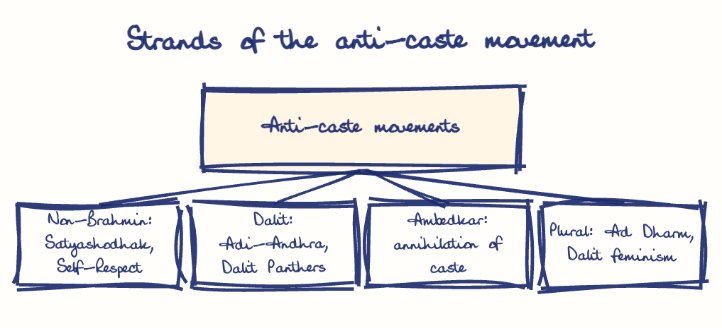
Anti-caste, Dalit and Non-Brahmin movements rose from entrenched caste exclusion, colonial education and caste associations, led by Phule, Periyar and Ambedkar, and stressed self-respect, education and political representation. They shaped Article 17 and reservations, and in the Telugu lands included the Adi-Andhra and Bhagya Reddy Varma's Adi-Hindu movements.
Model answer
Ghissu Editorial · Verified 4 Oct 2026 · 249 words
Colonial Education and Political Mobilization
British colonial reforms introduced modern education and legal frameworks that empowered marginalized groups. Caste associations such as the Satyashodhak Samaj in Maharashtra and the Self-Respect Movement in Tamil Nadu mobilized communities against Brahminical supremacy, fostering political awareness and social reform.
Rise of Caste-Based Organizations
The early 20th century saw the growth of caste associations that articulated collective demands. For example, the Adi-Andhra Mahasabha in Andhra Pradesh worked to improve Dalit education and social status, illustrating regional mobilization patterns.
Political and Constitutional Impact
The movements shaped Article 17 abolishing untouchability and reservations for SCs, STs and OBCs, strengthening affirmative action and political representation in legislatures and services.
Social Reform and Education Focus
Many movements prioritized education and socio-economic upliftment as tools for emancipation, exemplified by the Adi-Andhra Mahasabha’s efforts to establish schools and hostels for Dalits during colonial times.
Academic Exclusion1 Highlighted
Platforms like the Samata Sammelan have spotlighted caste-based exclusion in education, emphasizing ongoing challenges in access and equity.
This model answer is indicative and the model can make mistakes; please verify key facts independently.
Practise this question
1Get the answer sheet
Sized for this question.
2Write your answer
Timed, by hand.
3Get it marked
Your score and what to fix.
This chapter in the exam
Revolts of the 19th century, 1857, socio-religious and anti-caste movements5 questions
Asked in 2 of 2 sittings since 2016
Most tested: Anti-caste and social reform movements’ impact on Indian society and politics.
- 2024The major 19th Century tribal movements such as the Santhal Rebellion and the Munda Rebellion shaped the trajectory of Indian resistance against colonial rule. Discuss.
- 2024The nature of British rule and colonial policies significantly altered after the 1857 revolt. Discuss.
All 5 questions, sorted by sub-topic, with model answers and practice.
Question from the official TGPSC Group-I Mains 2016 paper. Answer written by Ghissu's engine and checked against our editorial standards. Found an error? Tell us and we correct it within 48 hours.